
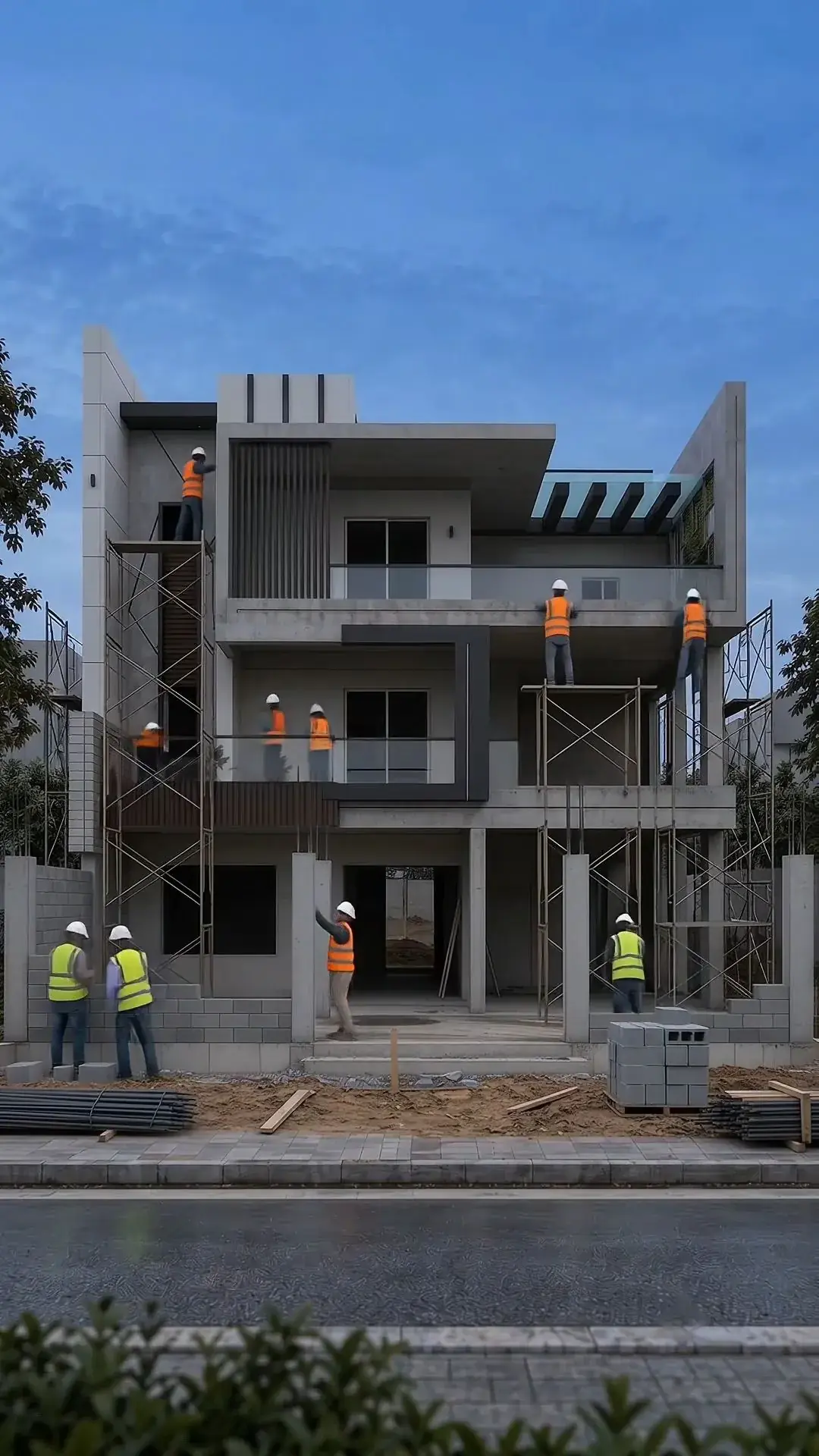
India's residential construction market is projected to grow from $263.89 billion in 2025 to $281.33 billion in 2026, and the turnkey/EPC segment within it is growing even faster — residential turnkey work is expanding at 11.02% annually, outpacing the 6.61% growth of the market overall (Mordor Intelligence, 2026). That shift is worth understanding before you sign anything, because "turnkey" and "hire your own contractors" aren't just two prices — they're two different ways of assigning risk.
This guide compares both models honestly: what each actually costs once GST and markup layers are accounted for, what causes most Faridabad construction disputes, and who's liable when something goes wrong at the seam between two trades.
Key Takeaways
- A turnkey (composite works) contract is taxed as a single supply at 18% GST, while a pure-labour-only contract for one residential unit can legally qualify for 0% GST on labour — a real cost difference, not a reason to default to either option.
- A 2025 Indian study on residential building cost overruns ranks poor coordination between construction parties among the top three causes, alongside material price escalation and activity delays (Scientific Reports, 2025).
- In global project-management research, more than half of every rupee at risk from poor project performance traces back to ineffective communication between parties (PMI, 2013).
- Turnkey contracts concentrate liability with one accountable party; hiring trades separately can be cheaper on paper but shifts coordination and seam-failure risk onto the homeowner.
What's the Real Difference Between Turnkey and Separate Contractors?
Turnkey construction means one company holds the contract for the entire build — structure, electrical, plumbing, finishing — and is contractually responsible for how every trade's work fits together. Hiring separate contractors means you sign individual agreements with a mason, electrician, plumber and painter, and you (or a contractor you appoint informally) coordinate the handoffs between them.
Neither model is universally cheaper or safer. The right choice depends on how much coordination risk you're willing to hold yourself versus pay someone else to hold for you.

Is Turnkey Actually More Expensive? What the Numbers Say
Turnkey construction typically costs more upfront because a general contractor's markup — usually 20–40% covering overhead and profit — replaces the smaller 6–9% margin an individual tradesperson adds to their own work, so hiring trades directly can save 15–30% on that portion of the job (Angi, 2026; figures reflect general project-management industry norms, not an India-specific study).
But that's not the whole picture — GST treatment cuts the other way. Under Section 2(119) of the CGST Act, a turnkey or composite works contract is taxed as a single supply at 18%, covering both labour and material with no split required. A pure-labour contract for constructing a single residential unit, by contrast, can legally qualify for a 0% GST exemption on the labour portion under Notification No. 12/2017-Central Tax (Rate) — material you buy separately is still taxed, but the labour saving is real.
| Contract type | GST rate | What it covers |
|---|---|---|
| Turnkey (composite works contract) | 18% | Labour + material bundled into one invoice |
| Pure-labour contract, single residential unit | 0% | Labour only — materials purchased and taxed separately |
Run both scenarios against your actual project size before deciding on cost alone — the markup saving from going direct can be real, but so is the coordination cost you take on to capture it, which the next section covers.
What Causes Most Cost and Time Overruns on a Faridabad Build?
A 2025 Indian study on residential building cost overruns ranked the causes in order: material price escalation first, delays in planned activity second, and lack of coordination between construction parties third (Scientific Reports, Apr 2025). Coordination failure isn't a minor factor — it's a top-three driver of exactly the budget overruns homeowners fear most.
Global construction-technology research puts a number on why: poor project data and miscommunication is responsible for 48% of all rework on construction projects, at an estimated $31.3 billion in annual cost across the industry studied — 26% from poor communication between stakeholders, 22% from inaccessible or inconsistent project data (FMI Corporation & PlanGrid, "Construction Disconnected," 2018).
None of this means separate contractors always fail to coordinate — plenty of experienced homeowners manage it well. It means coordination is real, unpaid work, and someone has to do it whether or not it's in anyone's contract.
Who's Liable When Two Trades' Work Fails at the Same Wall?
When a general contractor holds the full contract, they're responsible for every subcontractor's work under their scope — their warranty is expected to cover it, because they hired, supervised and sequenced that trade. When you hire trades separately, liability for defective work sits with whichever individual tradesperson did it, and the same logic that governs warranty flow-down in contract law elsewhere applies here too: unless the contracts are deliberately written to prevent it, a seam failure between two independently hired trades can leave no single party contractually obligated to fix it.
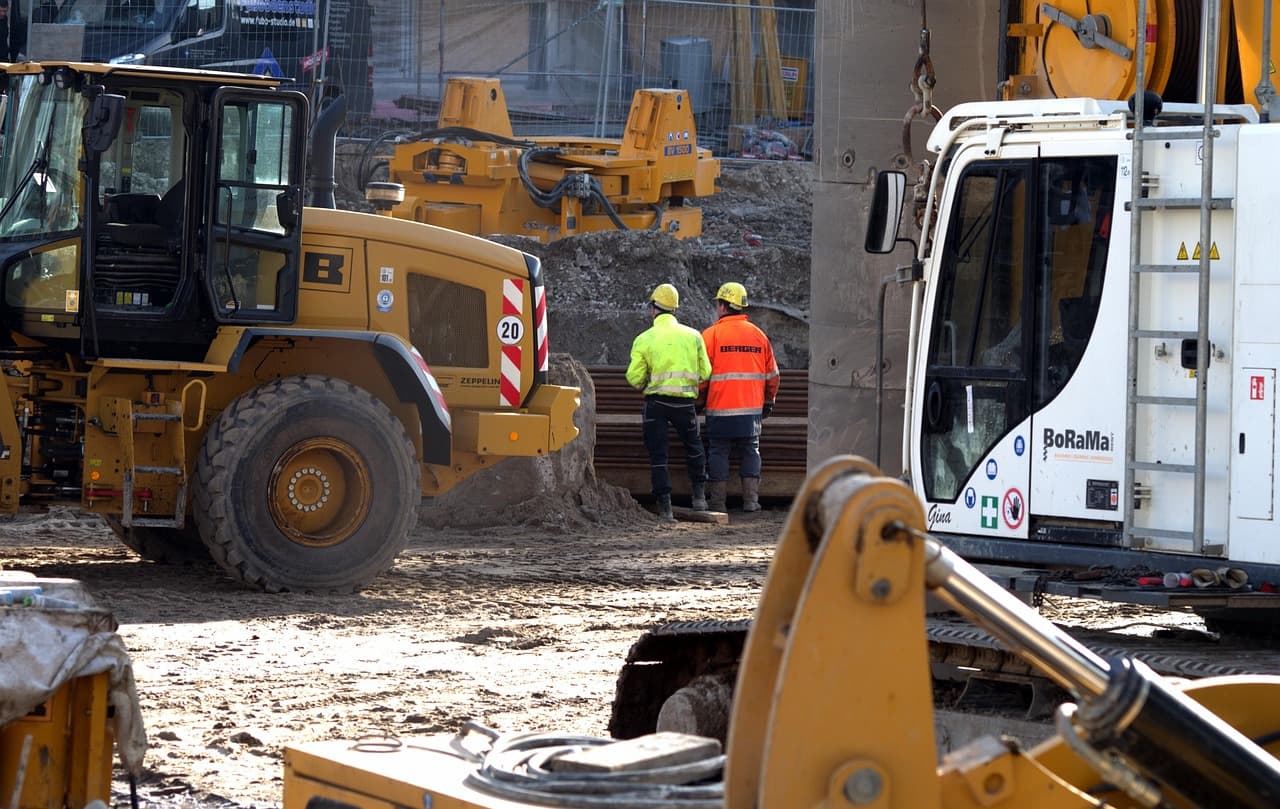
We've seen this exact gap play out on real sites — a leak traced to where the plumber's rough-in met the mason's wall, with each trade pointing at the other's work. On a turnkey contract, that dispute never reaches the homeowner; it's resolved internally because one party is accountable for both sides of that wall. On a multi-contractor build, the homeowner becomes the arbitrator by default, whether or not they signed up for that role.
Why Is Turnkey Construction Growing in India Right Now?
India's EPCM (Engineering, Procurement & Construction Management) market is projected to grow from $69.28 billion in 2025 to $111.92 billion by 2031, an 8.32% CAGR — and the residential segment within it is the fastest-growing part, at 11.02% CAGR, driven by PMAY subsidy structures and RERA's push toward contractual transparency (Mordor Intelligence, Jan 2026).
That growth doesn't prove turnkey is right for every homeowner — but it does mean single-point-of-accountability contracting is becoming the market default rather than a premium niche, particularly as RERA-style documentation expectations make an undocumented, informally-coordinated multi-contractor build harder to defend if a dispute reaches consumer court.
Considering a turnkey build in Faridabad?
See how our residential construction and turnkey process handles structural work, MEP coordination and finishing under one accountable team.
Explore Construction ServicesSo Which Should You Actually Choose?
Neither model is objectively better — the right one depends on how much coordination time you have, how complex the build is, and how much risk you're comfortable holding yourself. Whichever route you take, start from a realistic budget: our house construction cost guide for Delhi NCR covers per-sq-ft, per-gaj and per-floor costs.
| If this describes you... | Turnkey fits better | Separate contractors could work |
|---|---|---|
| Available time to supervise daily | Limited — you want one call, not five | You can be on-site regularly |
| Project complexity | Multi-storey, tight seismic-zone detailing | Simple, single-trade-heavy scope |
| Risk tolerance for disputes | Low — want one warranty, one point of contact | Comfortable mediating between trades yourself |
| Priority | Accountability and schedule certainty | Minimizing markup on labour-heavy scope |
Our construction timeline guide covers how these stages sequence regardless of which model you choose, and our construction cost guide for Faridabad breaks down exactly where the turnkey price premium shows up in the per-sq-ft numbers.
For material specification standards that apply either way, see our guide to choosing construction materials — the BIS grades matter whether one contractor sources them or five.
If you are weighing the interior side too, the interior design cost guide for Faridabad explains how design-only, PMC and turnkey fees are charged.
For a direct conversation about which model fits your plot and timeline, contact our team.